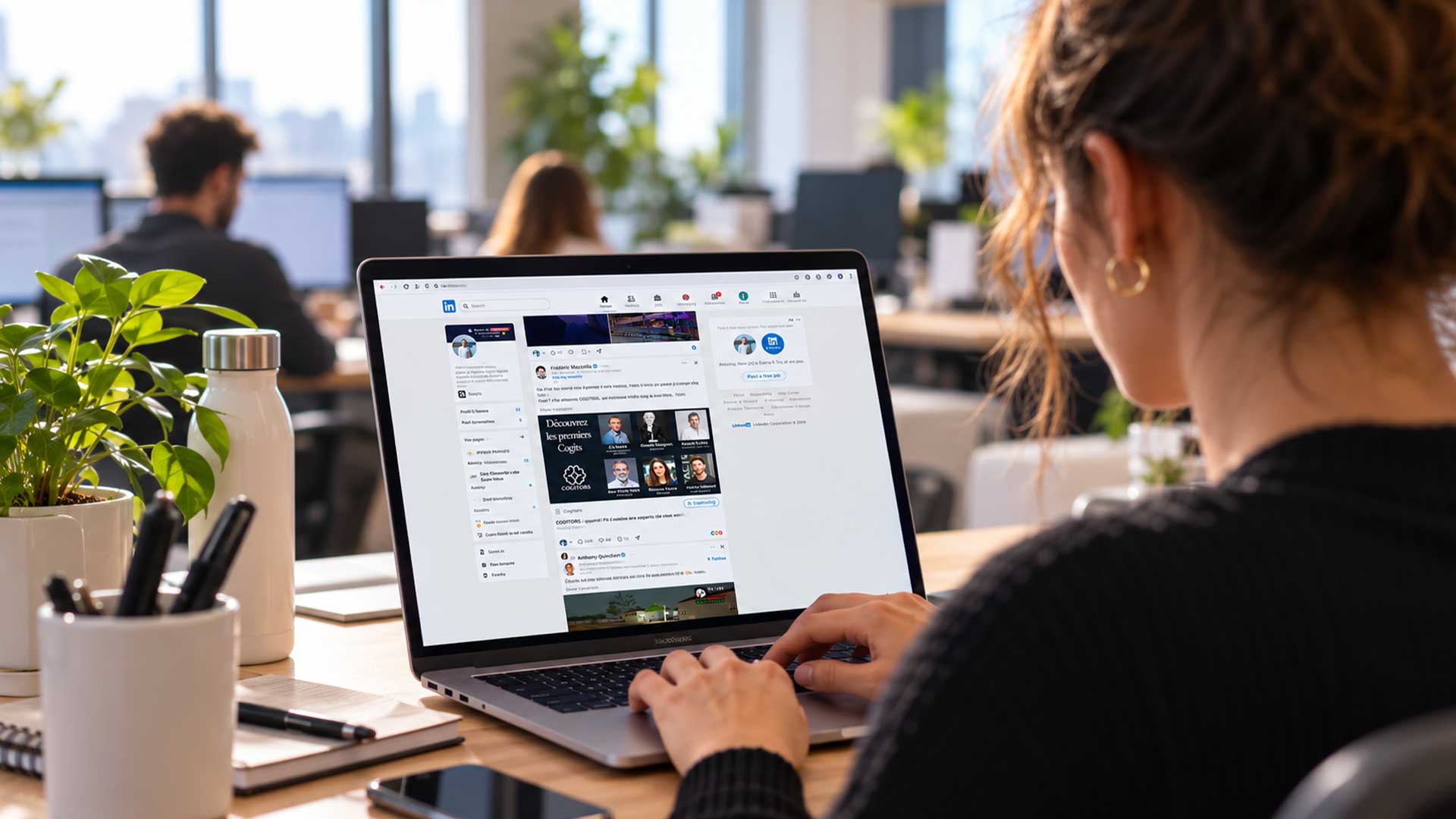
LinkedIn brought an enduring professional habit online: keeping in touch with people whose experience, work or introductions might matter later. Its history is not only about building a website. It is also about making professional relationships easier to maintain beyond a meeting or event.
This overview follows the platform's beginnings and major changes. Old membership estimates and staff figures are not treated as present-day statistics, and historical tools should not be assumed to remain available.
Before LinkedIn: keeping a professional network alive
Business cards, recommendations, conferences and trade events were familiar ways to meet contacts. They created opportunities, but keeping those relationships current took effort. A name in an address book did not necessarily show where someone worked later or what they could offer.
An online network could make those connections easier to revisit. The idea was to connect professional identities and relationships rather than restrict networking to people present at the same event.
The founding team
Reid Hoffman and Allen Blue were among the people behind LinkedIn. The founding effort combined professional experience, technology and the design of a service around relationships. Hoffman's background included work in technology companies and at PayPal.
The useful lesson is the connection between a practical need and a product designed to address it. LinkedIn was not created by one feature alone, nor should its history be reduced to only two people.
From an idea in 2002 to a launch in 2003
The project took shape in 2002 and launched in May 2003, before Facebook's launch in 2004. Its early community was much smaller than the network that developed later.
Starting with professional contacts provided a specific purpose for joining. People could build a visible professional identity and connect it to others, gradually extending the usefulness of the service beyond an initial group.
Growth through new professional uses
LinkedIn added tools around recruitment, contact management, communication and publishing. Jobs became one important use, while messaging and professional content created other reasons to return.
The original article mentions products such as InMail, Pulse, SlideShare and InMaps as part of that development. These references belong to the platform's history; they are not a claim that every named service still operates in the same form.
Growth also changed how the network was used. A professional profile could support a job search, a business introduction, industry discussion or the presentation of expertise. Those uses complemented rather than entirely replaced relationships formed elsewhere.
An international network
The service expanded beyond its first users and markets. International participation made it easier to connect with people outside a local professional circle, while different languages and sectors brought different expectations.
Network size does not automatically create a useful relationship. The relevance of a connection, the clarity of the profile and the quality of an exchange remain important regardless of how widely a platform is used.
The Microsoft acquisition
Microsoft completed its acquisition of LinkedIn in December 2016. The transaction, announced at about US$26.2 billion, marked a new stage in the company's development.
The French source's wording about an independent LNKD listing after the acquisition is not retained. A historical listing and the position following an acquisition are different matters.
Its impact on professional activity
LinkedIn created another place to present experience, discover opportunities, recruit and discuss work. Students, job seekers, employees and business owners can use the same network for different purposes.
For your own activity, start with that purpose rather than the platform's scale. A clear profile and relevant conversations are more useful than collecting connections without an objective.
A changing service, a continuing need
Tools and interfaces evolve, but the underlying need remains recognisable: help professionals find one another and maintain useful relationships. Understanding that history puts the platform in perspective without treating its past growth as a guarantee of results for every account.